


How Mobile Billboards Can Maximize Value and Exposure for Sponsors

Mobile billboards are, to put it in simple terms, moving billboards. They are most often found on the side of moving vehicles, such as in public transit and taxis, but they are most frequently seen on the side of large trucks. Mobile billboards are regarded as one of the most effective ways to advertise a brand. This is because mobile billboards come with a number of benefits. It can increase brand awareness, reach larger distances and more diverse audiences, and target specific areas–which is exactly why they are a perfect option for sponsorships. When you obtain a sponsorship, using mobile billboards to advertise the brand might be one of the most effective marketing strategies out there. Why? Let’s explore this a little further, starting with the costs of mobile billboards.
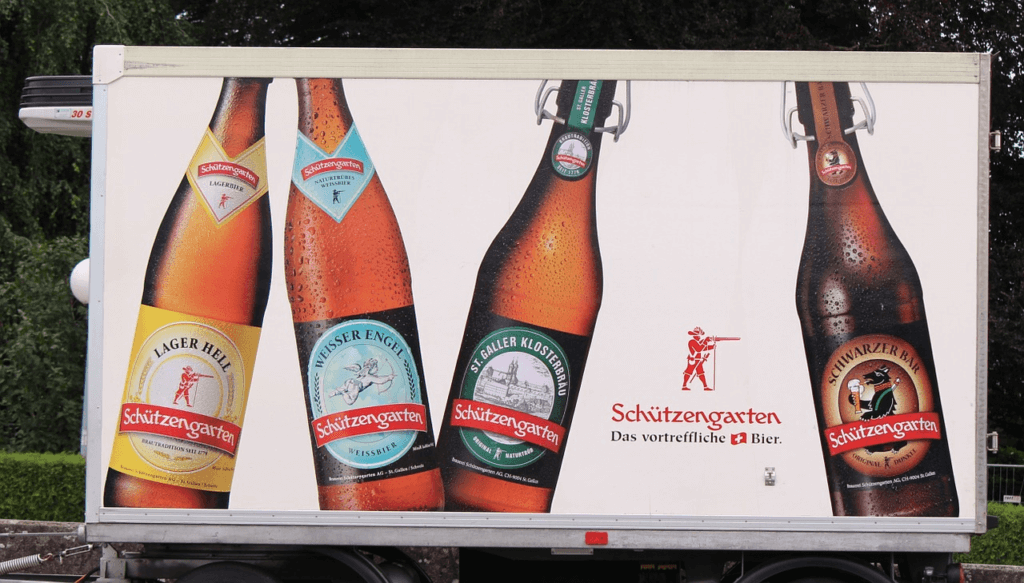
Mobile billboards — often referred to as moving billboards — are a dynamic form of out-of-home (OOH) advertising that brings brand messaging directly into public environments. Most commonly displayed on the sides of trucks, mobile billboards allow campaigns to travel through high-traffic corridors, commercial districts, and event zones throughout the day.

Unlike static placements confined to a single location, mobile billboards combine visibility with movement, allowing sponsors to distribute exposure across multiple environments and audience segments. This flexibility makes them particularly relevant for sponsorship campaigns, where the objective extends beyond awareness to include reach amplification, contextual placement, and measurable impact.

To understand how mobile billboards can maximize value for sponsors, it’s important to evaluate both performance metrics and practical considerations — including cost structure and delivery strategy.

https://pixabay.com/photos/beer-alcohol-swiss-beer-406218/

Measuring Sponsor Value Beyond Impressions

While estimated impressions and reach remain foundational metrics in out-of-home advertising, sponsorship value is increasingly evaluated through a broader performance lens. Traditional OOH measurement frameworks typically focus on impressions, reach, and cost-per-thousand (CPM) to quantify campaign delivery, as outlined in industry guides explaining how these metrics are calculated and applied in media planning.

However, exposure alone does not fully capture campaign impact. In recent years, industry analysis has highlighted the growing importance of attention metrics, which attempt to measure not just whether an ad had the opportunity to be seen, but how effectively it captured audience engagement. These metrics move beyond standard impression counts and provide deeper insight into how audiences process and interact with advertising in real-world environments.

For sponsors, this shift is significant. Mobile billboard campaigns do more than generate potential impressions; they create repeated, contextual visibility in environments where audiences are active and alert. Evaluating sponsorship performance through both delivery metrics and qualitative exposure factors — such as placement relevance, route alignment, and environmental context — allows sponsors to better understand the true value of their investment.

How much do mobile billboards cost?

Cost Per Impression

Of course, the price of renting a mobile billboard to advertise can vary due to a multitude of factors. However, it is worth noting that mobile billboards have one of the lowest CPM (cost-per-thousand-impressions) in the industry compared to other types of advertising. CPM is usually determined based on demographics, impressions and circulation. Demographics are determined based on the number of people who pass by the billboard. To break this down even further, characteristics such as age, gender, and even income are taken into account. This means that if you are placing a mobile billboard in a high traffic area, this will likely cost you a bit more than if you were to have the billboard running elsewhere. On the other hand, impressions are the estimated number of people that are expected to see your mobile billboard. This is calculated based on the mobile billboard’s size and the location it is intended to run in. Finally, circulation is based on traffic information. This means that the cost of your mobile billboard is also dependent on the volume of traffic, also regarded as the potential number of people that will drive by and see the advertisement, in the vicinity of your billboard. 
https://pixabay.com/illustrations/cost-board-cpl-writing-addresses-1176675/

Design Costs

Other factors to take into account are the costs that go into designing and making the mobile billboard itself, which is one of the largest costs associated with mobile billboards. This will typically depend on the size and type of mobile billboard, meaning if it is static or digital, with digital mobile billboards costing much more. A typical pair of mobile billboards (for each side of the truck) has been seen to fall within the range of $1,200 to $1,600. Of course, there will also be costs associated with getting the creative for the advertisement designed, which will also be an additional cost that should be factored into the price of a mobile billboard. The vehicle itself, where the ad will be placed, will also cost money. Average ranges for these vehicles have been seen to fall in between the range of $500 to $800 per day, but this once again varies widely due to a plethora of different factors, much like the ones we’ve already discussed.

Average Rates

With all of that being said, the average cost of a mobile billboard has been seen to be around 0.77¢ per 1,000 views. Some rates have even gone as low as 0.48¢. In contrast, other types of advertising will run you much more. However, as previously mentioned, the price will vary tremendously based on the type of billboard. The average prices for static mobile billboards are within the range of $24,000. Digital billboards will cost you much more, with an average range in the $100,000s. There is also the option of renting a mobile billboard. In these situations, the mobile billboards are rented per hour, with a typical timeframe ranging between six to ten hours a day. Needless to say, mobile billboards will still give you the most bang for your buck compared to other marketing strategies.

After discussing the logistics surrounding the price of a mobile billboard, the total cost of getting a mobile billboard might seem a little overwhelming. But by investing in a mobile billboard, even if it is only for a brief period of time, you can achieve an enormous return. Mobile billboards have been proven to be effective methods of advertising time and time again. This is because the ads that are placed on mobile billboards are large and loud–they have a presence that cannot be ignored. This means that it attracts the attention of many bypassers, and they have been proven to generate positive impressions of the advertised brand. When sponsorships are formed, there is the expectation that brands gain attention and traffic from investing. In other words, there must be a return back to the brand. It goes without saying that using mobile billboards for sponsorships will maximize both the value invested and exposure for the brand with ease, giving them what they want and more. 

Are mobile billboards worth it for my business?

Although mobile billboards are a great option for many sponsors, whether or not this form of advertising is an ideal option for your business depends on a number of factors, starting with what your business is looking to achieve from the implementation of mobile billboards. However, there are a number of ways your business can benefit from implementing mobile billboards as a part of your marketing strategy. Let’s explore them a little further.
https://pixabay.com/photos/times-square-taxi-street-new-york-783842/

Give your business the exposure it deserves

Magnified exposure is just one of the many benefits that your business will enjoy with the aid of mobile billboards. And we’re not talking about a simple public exposure either – with mobile billboards, you can choose the targeted demographics that are best suited for your business audience, which in return will increase the chances of converting bystanders to customers – this is exactly what your business needs! Not only that, but with the help of modern technology, you can even track the results and the effectiveness of your mobile billboards. Based on your targeted audience, these mobile billboards, such as moving advertising trucks, will take the routes that are best preferred for your custom audiences in order to maximize your results.

How Movement Increases Sponsor Visibility

Sponsors invest in visibility, but visibility is not only determined by how many people pass an advertisement. It is also influenced by whether the advertisement stands out within its surroundings. In busy urban environments where consumers encounter constant visual information, static placements can gradually blend into the background as audiences become familiar with them.

Advertising research has shown that movement naturally draws attention because people instinctively react to dynamic visual elements before processing detail. When a message changes position within an environment, it becomes more noticeable compared to fixed objects in the same setting. Outdoor advertising formats already achieve strong noticeability among consumers, and movement further increases the likelihood that a message is recognized rather than overlooked.

Mobile billboards apply this principle by introducing the sponsor’s branding across multiple streets, neighbourhoods, and activity zones instead of relying on a single viewing point. Each new environment refreshes the visual context, helping the message remain noticeable across longer campaign durations.

From a sponsorship perspective, this means exposure is not only measured by impressions, but by how consistently the brand stands out within everyday surroundings.

Take your business to areas where other forms of billboards cannot reach

Another huge benefit of mobile billboards is that they can take your business to virtually any area – for comparably less associative costs. Traditional billboards may have been a great idea at one point, but mobile billboards outshine other traditional methods of advertising when it comes to exposure and mobility, which are key variables to growing your brand. A huge problem of many traditional forms of advertising and marketing strategies is that they remain static, or have a limited reach in terms of their mobility. With the help of modern mobile billboards, you can take your business anywhere. Instead of relying on bringing customers attention to your brand, mobile billboards allow you to bring your brand to their attention! To add to that, mobile billboards have the ability to easily relocate to essentially any given area, which means that consumers can easily notice your brand in a number of different locations from a different distance, which further grows your brand exposure and popularity. 

Repetition and Familiarity in Sponsorship Campaigns

Sponsorship visibility is most effective when audiences encounter branding more than once. A single impression may create awareness, but familiarity develops gradually as people repeatedly notice the same brand across their daily routines. Over time, these encounters connect together into a recognizable presence rather than isolated moments of exposure.

Repeated exposure allows audiences to become comfortable with a sponsor’s message without requiring immediate action. The first encounter introduces the brand, while later encounters reinforce recognition and understanding. Because people naturally follow similar travel patterns throughout the week, advertising that appears across multiple locations can strengthen memory through consistent reinforcement.

Mobile billboards support this process by circulating within defined geographic areas instead of remaining fixed in one position. As the same individuals encounter the branding across different streets and times of day, the campaign builds familiarity rather than relying on a single high-impact moment.

From a sponsorship perspective, value is created not only through reach but through accumulated recognition, where repeated encounters help solidify the message in memory.

A cost effective method of targeting – yield results like never before

Another fascinating aspect of mobile billboards is the fact that they can yield highly desirable results all the while saving your budget. Yes, although mobile billboards are not cheap, they are a significantly more cost effective method of advertising as compared to other traditional marketing strategies such as social media marketing, which requires a tremendous amount of money for it to yield the results you desire. 

Combining entertainment and mobile billboards

Mobile billboards can be used as a great strategy for promoting public events, sponsorships, as well as acquiring the attention of large crowds. For example, if there is a huge sports event taking place in your city, getting a mobile billboard with your message spread across it can prove to be a highly potent source of exposure for your business. To add to that, many sponsors can also use mobile billboards as a means of gaining exposure to further promote their event or an organization. Particularly with event promotions, such as nightclubs, festivals, or public occurrences, many sponsors often choose to use social media and digital advertising as their primary strategy of promotion, which often yields satisfactory levels of results. However, there are a couple of important factors that need to be kept in mind with choosing social media over mobile billboards. First and foremost, social media marketing requires a large budget, and not all companies or organizations may be in the financial position to afford such sacrifice. To add to that, although digital marketing is most definitely a powerful marketing platform, its reach is limited as compared to mobile billboards. For example, let’s say that a sponsor wants to gain more public exposure for an upcoming public event. Although digital marketing would help with increasing the popularity of it, with the help of mobile billboards, the sponsor can reach crowds wherever they choose to gather. 

Strategic Route Planning for Sponsorship Impact

One of the defining advantages of mobile billboard sponsorships is the ability to align campaign routes with real-world audience behaviour. Unlike static placements that remain fixed in a single location, mobile campaigns can be strategically scheduled to circulate through high-traffic corridors, event zones, retail districts, and neighbourhoods aligned with sponsor objectives.

Deliberate route selection is more than a logistical decision — it directly influences performance. Research into mobile advertising has shown that location-based targeting can significantly outperform non-targeted mobile campaigns, reinforcing the importance of planning routes based on audience movement patterns rather than broad geographic assumptions.

For sponsors, this means campaigns can be positioned near moments of heightened consumer activity — during commute hours, major events, or peak retail times — increasing the likelihood of repeated and contextually relevant exposure. By aligning mobility with behavioural data and environmental context, sponsorship campaigns can move from passive visibility to strategically placed brand presence. Rather than relying on static exposure alone, route-optimized mobile billboard campaigns allow sponsors to extend their reach across multiple micro-environments within a single day. This flexibility supports awareness objectives while ensuring that visibility is not only broad, but intentionally distributed across areas where it can generate the greatest impact.

Integrating Sponsorship Campaigns into a Broader Media Mix

Mobile billboard sponsorships are most effective when incorporated into a broader, multi-channel media strategy rather than executed in isolation. Out-of-home consistently demonstrates strong standalone attention and reach among Canadians, making it a powerful foundation within the media mix.

Research shows that adding out-of-home to existing campaign plans increases overall reach by an average of 23%. This lift highlights OOH’s role as both a broad-reach medium and a complementary amplifier.

The synergy is particularly strong when OOH is paired with online media. Studies indicate that combining out-of-home with online advertising increases reach by approximately 10% compared to online-only campaigns. For sponsors, this creates an opportunity to introduce messaging in physical environments and reinforce it through digital engagement strategies.

Importantly, excluding OOH from campaign planning can result in measurable missed opportunities. Campaigns relying solely on digital channels may miss a significant portion of potential audience reach without out-of-home support.

When strategically aligned with other media investments, mobile billboards evolve from a standalone visibility tactic into a reinforcement channel that enhances reach, supports recall, and contributes to cohesive campaign performance across touchpoints.

Contextual Relevance During Live Events

Sponsorship campaigns are often most effective when audiences encounter branding within a relevant environment. When people attend an event, they are already focused on a shared activity, making surrounding messaging feel connected rather than intrusive. Instead of competing for attention, the advertisement becomes part of the overall experience.

Research on consumer behaviour shows advertising is more influential when it aligns with what people are currently doing, because individuals naturally become more receptive to information related to their present situation. In these moments, messaging supports the experience rather than interrupting it, allowing the brand to feel associated with the activity itself.

Mobile billboards can reinforce event sponsorships by extending visibility beyond the venue. Routes around entrances, nearby streets, and surrounding neighbourhoods allow attendees to encounter the brand before and after the event, strengthening association between the sponsor and the experience.

From a sponsorship standpoint, contextual relevance helps convert exposure into memory by linking the brand with a specific moment rather than a standalone advertisement.

Supporting Sponsorships Within a Broader Media Strategy

Sponsorship campaigns are most effective when they support a broader marketing effort rather than functioning as a standalone tactic. Audiences rarely rely on a single interaction when forming brand awareness; instead, they encounter messaging across different formats and moments throughout the day. Each exposure contributes to a cumulative understanding of the brand.

Marketing strategies that work together across multiple touchpoints help create a consistent experience, allowing audiences to recognize the same brand in different environments. When physical advertising reinforces digital messaging, campaigns become easier to remember because each channel strengthens the others rather than competing for attention.

Mobile billboards can play a supporting role in this process by acting as a real-world reminder of messages audiences have already encountered online or through other media. Seeing a brand in a physical environment can confirm familiarity, making later digital interactions feel more recognizable. From a sponsorship perspective, value is strengthened when exposure is coordinated rather than isolated, turning separate impressions into a connected brand presence

Final Takeaway

Mobile billboard sponsorships deliver the greatest value when visibility is supported by deliberate strategy. While broad exposure remains important, the real impact comes from how that exposure is distributed across high-value environments and aligned with audience behaviour. Strategic route planning allows sponsors to move beyond static placement and position their brand in moments and locations that reinforce campaign objectives.

When integrated into a broader media mix, mobile OOH can strengthen overall campaign cohesion by extending messaging into physical spaces where audiences are active and attentive. This layered presence helps reinforce awareness, complement digital and experiential efforts, and maintain consistency across multiple touchpoints throughout the day.

Ultimately, effective sponsorship is not simply about being seen — it is about being seen in the right places, at the right times, and within the right contexts. By aligning mobility with broader marketing strategy, sponsors can ensure their investment delivers not only reach, but meaningful and intentionally positioned brand impact.


Talk to a Mobile Billboard specialist today

x